Open Forum
I just got home from Germany after a whirlwind trip to join the Eclipse Democamps in Hamburg and Berlin. And now it’s time to head back already. Next week is the Open Forum in Stuttgart, and I have the great honour of joining an all star cast of keynotes including Dr. Willibert Schleuter (Audi), Harald Hönninger (Bosch) and Prof. Dr. Manfred Broy (Technical University Munich).
Open Forum is a new event that came about after successfully co-hosting the Eclipse Embedded Day and SPICE Days Conference in Stuttgart the last two years. The focus of the event is how open source organizational methods need to be adopted by enterprises. Enterprises which are today confronted by the twin challenges of ever-accelerating demands for innovation, and the fact that it is now largely software which is driving brand value and differentiation amongst consumers. Imagine the difficulty those challenges pose to companies which for nearly a century have prided themselves on mechanical and manufacturing excellence. Organizations like Eclipse offer them an interesting proof point that open source methods can be used to deliver high-quality, innovative software on a predictable schedule. As we just recently showed again when we shipped Indigo.
I am looking forward to this event, as it is well outside my normal open source comfort zone. It will be fascinating to talk with a community grappling with how to apply the lessons of open source to the next wave of innovation in industrial methods.
EclipseCon North America 2012
I have some news!
EclipseCon North America is moving from our long-term home in Santa Clara. We love the location there and the team at the Hyatt Regency Santa Clara has been wonderful to work with. But after six years in a row it was time to try something new.
I’m very happy to let everyone know that EclipseCon North America 2012 will be held at the Hyatt Regency in Reston, Virginia. The dates are the traditional last-week-of-March timeslot. March 26th to March 29th to be specific.
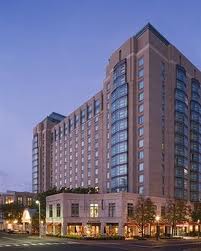
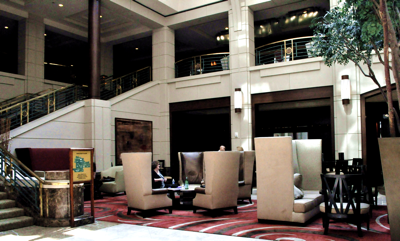
For those who haven’t been there, Reston is a suburb of the Washington, DC area with a large software and technology presence. The facility is wonderful, it is close to a major international airport (Dulles, aka IAD) and we’re thrilled with the package that the hotel has offered us. EclipseCon will basically take over the hotel for the week, and I personally love the ambience when our community is in every nook and cranny of the facility. Eclipse 24×7 for four days is really what EclipseCon is all about.
So mark the dates on your calendar and come and enjoy our ninth edition of EclipseCon North America.
Hudson Now At Eclipse
Today’s announcement that Oracle is proposing to move the Hudson project to the Eclipse Foundation is big news. It’s news because of the popularity of the project, its history and, let’s face it, the Hudson/Jenkins fork that happened a few months back.
One of the key issues that split the Hudson/Jenkins community was how to balance the corporate and community aspects of the Hudson project. Kudos to Oracle for continuing to work on these issues and make, what I believe is the right move for Oracle and for the Hudson community.
By moving the Hudson project to the Eclipse Foundation, Hudson will now be operating in a vendor-neutral, transparent, and not-for-profit organization. This means potential contributors will no longer be required to sign an Oracle contribution license agreement to contribute code. In fact, Eclipse allows you to keep the copyright to your code; the code you contribute remains yours, licensed under the Eclipse Public License (EPL). Furthermore, the Hudson trademark will now be owned by the Eclipse Foundation and held in trust for the benefit of the entire community rather than any particular company. So if you’ve been wary of participating in Hudson because of “trust issues”, the Eclipse model of collaborative development should make things a lot easier. Hudson will now be a truly community-based project.
Oracle has certainly taken some lumps for their handling of open source communities, hopefully they will get the kudos they deserve in this case. In particular, I would like to point out the effort that they have put into seeking the collaboration and support of Sonatype, Tasktop, VMware, Intuit and IBM. Eclipse Hudson is showing immediate signs of growth and diversity.
In our view, Hudson is coming to Eclipse for all the right reasons. The Eclipse community is itself a big user of Hudson, and we all look forward to the growth in momentum, innovation and predictability that will result from this move. With the addition of the Eclipse community processes for development, release and intellectual property management, we’re confident that the Hudson community and ecosystem will be thrilled with Hudson as an Eclipse project.
The Hudson project proposal is now available for review. I’d encourage everyone to provide feedback and welcome Hudson into the Eclipse community.
Open Healthcare. Or Not.
I thought Gunnar Hellekson’s post on the recent RFP from the US Veteran’s Administration (VA) to open source their VistA electronic healthcare record (EHR) system was a great overview of the challenges facing massive government agencies as they attempt to adopt an open source approach to their mission. I definitely agree with the list of challenges and issues that Gunnar has laid out for the proposal. I further agree with Ben Mehling of Medsphere that the exciting thing is that “…it’s no longer a question of IF, but rather WHEN…” the VA is going to open source VistA.
As a tax payer, citizen and frequent user of healthcare services, I am terribly excited about the idea of a truly open source community creating a free platform for EHR for use around the world. Certainly we could use something like this here in Canada. The ability of open source to provide a worldwide, vendor-neutral software platform that an ecosystem can thrive, compete and innovate upon is unparalleled. Given the dire straits that virtually all modern healthcare systems find themselves in, the potential upside implicit in what the VA is proposing is an incredible opportunity. You can see a good review of the potential in this paper from Carnegie Mellon funded by the VA as it did its due diligence.
The RFP’s main objective is the creation of a “Custodial Agent” to act as the governing body for a VistA community. The interesting challenge ahead for the VA as they create such a body will be to balance their impulse to control, relative to the need for community. The notion of “Control versus Community” is well documented in Matt Aslett’s work from the 451 Group, a nice summary of which has been provided by Henrik Ingo. And frankly, I am very worried that there are a long list of impediments which could cause this initiative to fail.
We all know that governments are by their very nature conservative, and primarily serviced by firms which specialize in knowing how to meet the specific requirements of their complex procurement and management processes. And despite the best of intentions, I struggle to believe that the people and institutions behind this initiative will be successful in establishing a truly vendor-neutral, open, transparent and meritocratic community which can deliver on the vision. Not because of lack of desire, but because of lack of knowledge and the specific skillsets of experienced community development people. You know: the folks who’ve been there, done that and “get it”. I worry that what will come out of this process will be what Matt Aslett called “Stage 3 – Vendor-dominated open source development and distribution project”, except that the “Vendor” here will be the VA and a prime contractor. If that happens, I highly doubt that this initiative will be the success it deserves to be. Or perhaps I’m overly pessimistic, and this is simply a learning stage that the VA and its ecosystem will need to go through. After all, lots of very smart companies made the same errors early in their march towards openness.
To me, the logical solution to VA’s search for a governing body would be to take VistA to a community which already exists, and which already has a clear community-based governance model in place. Reading the RFP, I could not help but think that at least three quarters of the required responses could simply be links to already existing governance, process and licensing documents already here at the Eclipse Foundation. And most of the remaining pieces could be implemented as an industry working group. Too bad VistA is implemented using MUMPS, which is not exactly a mainstream Eclipse development platform.
Certainly our good friends and former colleagues over at OpenHealthTools.org would be a logical fit as well. They have been working in the healthcare domain with a view towards creating an Eclipse-style community for years. And no one knows ecosystem development better than their Executive Director, Skip McGaughey. Surely one of the vendors interested in responding to this will do the sensible thing and enlist their support in their submission?
So this will be a very interesting space to watch. It is incredibly daring for an organization the size of the VA to embrace open source as a strategy. This is a long overdue initiative, as the current mess of software systems and vendors has created the very definition of a gridlock economy in the application of IT to healthcare. I’m impressed with the process that led to the RFP. My fingers are crossed that the stars align to deliver a truly open platform for innovation in healthcare.
Congratulations David!
Each year, the Eclipse Foundation recognizes key contributors and committers amongst its community with awards. This year we created a new Lifetime Contribution Award to recognize an individual who has a long, sustained record of contribution to Eclipse as a whole. That is, all three communities of Eclipse: adopters, users, and committers. The award is chosen by the Eclipse Foundation Staff, and in our view is a recognition of the community member we feel has long made valuable contributions to the success of Eclipse. And we don’t mean technical contributions to projects, no matter how brilliant. We mean contributions which have impacted the success of the community.
The winner of the first ever Eclipse Foundation Lifetime Contribution Award is David Williams of IBM.

David Williams Accepting His Eclipse Lifetime Contribution Award
David has been a member of Eclipse since 2004, is a committer on 10 Eclipse Projects, Project Lead of 3, an active member of the Tools PMC, PMC Leader of the Web Tools Platform Project, and current chair of the Eclipse Planning Council. Above and beyond all that, though, David has helped all of Eclipse by leading many of the yearly Simultaneous Release trains: starting with the very first one, Callisto, setting in motion the vision and basic mechanisms that are still in place. While not the official lead of Europa or Ganymede David was still central to getting them done, on time. Finally, becoming Planning Council Chair during Galileo, he lead it to completion, then Helios, and now Indigo. David has successfully balanced being both mentor and task-master to keep everyone on track, meeting the requirements to form a common software site repository at Eclipse, which in turn is an enormous benefit to all three communities of Eclipse: adopters, users, and committers.
David is without a doubt one of the most highly regarded members of the Eclipse community. He is a tireless worker with a key focus on doing the right thing for the projects. His dedication is remarkable and I was pleased to see his recognition with the Lifetime Contribution Award this year.
I would like to thank IBM for supporting David’s continuing contributions to the future success of Eclipse.
Please join me in congratulating David!
 Life at Eclipse