Happy Holidays from the Eclipse Foundation
As 2022 draws to a close, I would like to express my sincere gratitude to our contributors, committers, members, and the Eclipse Foundation team for your commitment, passion, professionalism, persistence, and tremendous contributions to our community’s success.
This year included a number of accomplishments and milestones in the Eclipse community. We welcomed over 20 new projects, 55 new member companies, and a new working group with Eclipse Software Defined Vehicle. Also, this year, the Board of Directors approved the creation of Interest Groups, the next step in furthering the Eclipse Foundation’s governance framework to enable “innovation through collaboration” by empowering members to work together using a lighter-weight governance structure than our more formal working groups. Find out how to start a collaboration and share the opportunity with your colleagues and network.
After 3 years of virtual interactions, we held our first in-person EclipseCon in Ludwigsburg. This chance to connect with friends and colleagues, new and old, was not taken for granted with over 415 participants. We could not make it happen without our speakers, sponsors and participants! Mark your calendars for the next EclipseCon – October 16-20, 2023.
Moments like that remind us of the importance of coming together, and we hope that the new year will give us many more opportunities for our global community to collaborate.
All the best for 2023!
Introducing the Automotive Open Source Summit
2022 has been a fantastic year for the Eclipse Foundation. We’ve managed to grow all aspects of our organization, due in no small part to the ongoing proliferation of open source across industries worldwide. Perhaps no one Working Group exemplifies our efforts in 2022 more than the Eclipse Software Defined Vehicle (SDV) Working Group, which has seen significant momentum in terms of new members, innovation, and new projects. Just this week, Mercedes-Benz Tech Innovation has announced they will be lending their own resources and talents to Eclipse SDV. With this in mind and before we all part ways for the holidays, I wanted to cap this year with some exciting news related to just this subject.
Coming in early June 2023, the Eclipse Foundation and the Eclipse SDV WG will hold the first automotive industry event focused on open source software and collaboration-based innovation. Named the Automotive Open Source Summit and based in the Munich area, this event will highlight speakers from organizations throughout the auto industry, including organizations outside the Eclipse community, as well as leaders within our own automotive initiatives. This will be a one-day and a half event and specific details will be finalized early in the new year.
The Summit will focus on latest trends, “business” topics targeting executives, senior technical leaders, and other decision makers. The main conference will be preceded by an exclusive executive round table attended by the industry’s most influential leaders. Our goal is that this conference becomes a “must attend” event for all participants in the automotive software ecosystem regardless of whether they are actively engaged with open source technology. In the coming years, we plan on extending the program for developers by designing a technical targeted track.
The Summit will feature speakers from Eclipse automotive initiatives as well as organizations and leaders from outside the Eclipse community. We want to attract the participation of all high profile open source and open specification initiatives in the automotive industry.
This is just one of the exciting new developments the Eclipse Foundation has percolating for next year. We can’t wait to give you and the rest of the community more details. In the meantime, Happy Holidays to you and yours for 2022 and we look forward to engaging with all of you in 2023!
Survey Says: Confidence Continues to Grow in the Jakarta EE Ecosystem
The results of the 2022 Jakarta EE Developer Survey are very telling about the current state of the enterprise Java developer community. They point to increased confidence about Jakarta EE and highlight how far Jakarta EE has grown over the past few years.
Strong Turnout Helps Drive Future of Jakarta EE
The fifth annual survey is one of the longest running and best-respected surveys of its kind in the industry. This year’s turnout was fantastic: From March 9 to May 6, a total of 1,439 developers responded.
This is great for two reasons. First, obviously, these results help inform the Java ecosystem stakeholders about the requirements, priorities and perceptions of enterprise developer communities. The more people we hear from, the better picture we get of what the community wants and needs. That makes it much easier for us to make sure the work we’re doing is aligned with what our community is looking for.
The other reason is that it helps us better understand how the cloud native Java world is progressing. By looking at what community members are using and adopting, what their top goals are and what their plans are for adoption, we can better understand not only what we should be working on today, but tomorrow and for the future of Jakarta EE.
Findings Indicate Growing Adoption and Rising Expectations
Some of the survey’s key findings include:
- Jakarta EE is the basis for the top frameworks used for building cloud native applications.
- The top three frameworks for building cloud native applications, respectively, are Spring/Spring Boot, Jakarta EE and MicroProfile, though Spring/Spring Boot lost ground this past year. It’s important to note that Spring/SpringBoot relies on Jakarta EE developments for its operation and is not competitive with Jakarta EE. Both are critical ingredients to the healthy enterprise Java ecosystem.
- Jakarta EE 9/9.1 usage increased year-over-year by 5%.
- Java EE 8, Jakarta EE 8, and Jakarta EE 9/9.1 hit the mainstream with 81% adoption.
- While over a third of respondents planned to adopt, or already had adopted Jakarta EE 9/9.1, nearly a fifth of respondents plan to skip Jakarta EE 9/9.1 altogether and adopt Jakarta EE 10 once it becomes available.
- Most respondents said they have migrated to Jakarta EE already or planned to do so within the next 6-24 months.
- The top three community priorities for Jakarta EE are:
- Native integration with Kubernetes (same as last year)
- Better support for microservices (same as last year)
- Faster support from existing Java EE/Jakarta EE or cloud vendors (new this year)
Two of the results, when combined, highlight something interesting:
- 19% of respondents planned to skip Jakarta EE 9/9.1 and go straight to 10 once it’s available
- The new community priority — faster support from existing Java EE/Jakarta EE or cloud vendors — really shows the growing confidence the community has in the ecosystem
After all, you wouldn’t wait for a later version and skip the one that’s already available, unless you were confident that the newer version was not only going to be coming out on a relatively reliable timeline, but that it was going to be an improvement.
And this growing hunger from the community for faster support really speaks to how far the ecosystem has come. When we release a new version, like when we released Jakarta EE 9, it takes some time for the technology implementers to build the product based on those standards or specifications. The community is becoming more vocal in requesting those implementers to be more agile and quickly pick up the new versions. That’s definitely an indication that developer demand for Jakarta EE products is growing in a healthy way.
Learn More
If you’d like to learn more about the project, there are several Jakarta EE mailing lists to sign up for. You can also join the conversation on Slack. And if you want to get involved, start by choosing a project, sign up for its mailing list and start communicating with the team.
Jakarta EE 10 Brings Java Development Into the Modern Cloud Native Era
Jakarta EE, a Working Group hosted by the Eclipse Foundation, released Jakarta EE 10 today.
This achievement was only possible because of a global community of contributors. Congratulations and thank you to everyone who played a part in this release.
There are many new and innovative features added by the Jakarta EE community.
Jakarta EE 10 Enables Modern, Lightweight Java Applications and Microservices
Let’s start with some of the key updates in Jakarta EE 10 — updates that plant Jakarta EE firmly in the modern era of open source microservices and containers.
Most prominently, Jakarta EE 10 includes a new profile specification: Jakarta EE Core Profile. The Core Profile includes a subset of Jakarta EE specifications that target the smaller, lightweight runtimes needed for microservices development. This is the first new Profile added to the enterprise Java specifications in over a decade.
In addition, new functionality has been added to more than 20 component specifications. For example:
- Jakarta Contexts and Dependency Injection (CDI) 4.0 includes a new CDI-Lite specification allowing a reflection-free programing model that enables compiling to native by providing build compatible extensions.
- Jakarta RESTful Web Services 3.1 standardizes a Java SE Bootstrap API and support for multipart/form-dat
- Jakarta Security 3.0 supports OpenID Connect for authentication to help developers meet modern web-based security requirements
Jakarta EE 10 also broadens support for annotations so it’s easier to build modularized applications and there’s better integration across component APIs.
Finally, I want to point out that Jakarta EE 10 gives enterprises the flexibility to leverage Java in the way that’s best for their organization. They can:
- Develop and deploy Jakarta EE 10 applications on Java SE 11 as well as Java SE 17, the most current long-term support (LTS) release of Java SE
- Take advantage of new features, including the modular system, that were introduced in Java SE 9 and supported in Java SE 11
The Jakarta EE Gamble Is Paying Off
This is all great news for Jakarta EE. But to understand how significant this release is, we need to go back to the Java EE days.
Java EE was the bedrock of application development for the Fortune 1000 for 20 years before it moved to the Eclipse Foundation as Jakarta EE. But the first Jakarta EE releases didn’t add new functionality. Then, Jakarta EE 9 introduced a major breaking change: the move to the jakarta.* namespace.
It’s hard to overstate what a gamble that was. Java EE had been basically backwards-compatible for more than two decades. We asked enterprises to change the fundamentals of applications they’d been relying on for a long time. We asked the enterprise Java ecosystem to re-align their products and opens source projects on a new namespace. Oftentimes, when you try to make such a radical change, your ecosystem says no, it’s too much work. And quite a few people thought the Jakarta EE gamble could fail for exactly that reason.
But it didn’t. IBM, Red Hat, Payara, Spring, the Apache Tomcat and TomEE projects, and Eclipse Jetty, to name a few, all moved to the new namespace with us.
Now, with new support for modern microservices architectures and containers, Jakarta EE 10 paves the way for Jakarta EE to drive the innovative, multi-vendor standards needed for the future of our industry.
Get Involved in the Future of Jakarta EE
The momentum around Jakarta EE 10 is well underway. Eclipse GlassFish has released a compatible implementation, and other enterprises and project teams — including Fujitsu, IBM, Oracle, Payara, Red Hat and Tomitribe — are already working towards certifying Jakarta EE 10 compatible products
Jakarta EE has an exciting future ahead, and we want everyone to participate and contribute. To learn more, connect with the global community. If enterprise Java is important to your business strategy, join the Jakarta EE Working Group. Learn more about the benefits and advantages of membership here.
Eclipse Foundation Celebrates Pride Month
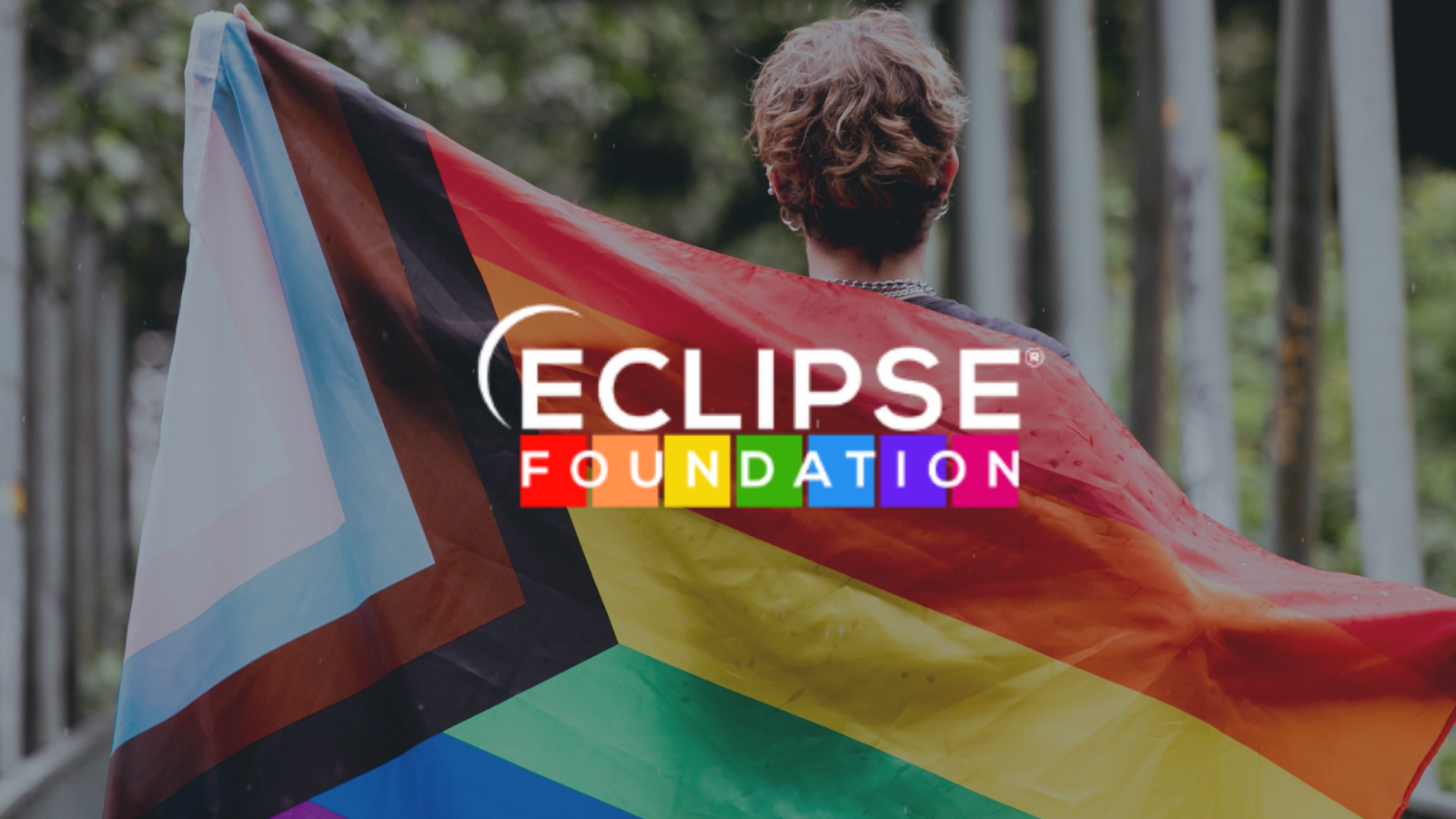
From all of us at the Eclipse Foundation, we’d like to wish the LGBTQ+ community a happy Pride Month.
As June winds down, we’d like to recognize the Eclipse Community’s continuing efforts to foster an open and welcoming environment for everyone.
Our Community Code of Conduct outlines the standards of behavior for everyone in our community. These standards include the usage of inclusive and welcoming language, being respectful of differing viewpoints, and showing empathy towards members of differing communities.
With contributors and committers from all over the world with different life experiences, we understand that it takes all of us to maintain a culture where everyone can feel like they belong. We also understand that our efforts to create safe and accepting spaces for people of all races, faiths, sexual orientations and gender identities do not end at simply upholding our Code of Conduct.
That’s why we’re welcoming feedback on how we can increase our inclusion and diversity efforts. If you have any ideas on how we can work to improve in this area, please contact emo@eclipse.org.

